

SKETCH GALLARY
BARANAS TEXTILE
Textiles Industries:
Banaras usually known as areligious and cultural centre is also famous since antiquity for its textile industry. Banaras textile and the designs produce there were sole throughout India and exported to many foreign countries.
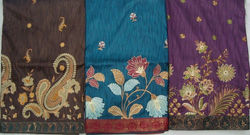
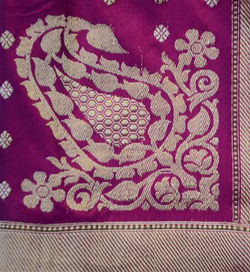
A Banarasi saree is a saree made in Varanasi, a city which is also called Benares or Banaras. The sarees are among the finest sarees inIndia and are known for their gold and silver brocade or zari, fine silk and opulent embroidery. The sarees are made of finely woven silkand are decorated with intricate design, and, because of these engravings, are relatively heavy.
Varanasi is a major centre of arts and designs. It is a producer of silks and brocades with gold and silver thread work, carpet weaving, wooden toys, bangles made of glass, ivory work, perfumes, artistic brass and copper ware and a variety of handicrafts.The former cantonment graveyard during the British Raj is now the location of Varanasi's Arts and Crafts
Baranas grew as an important industrial centre, famous for its muslin and silk fabrics.
manufacturing product:
Carpets,Sharees,Ladies suite,Dupattas,Handicrafts e.t.c.
 |  |  |
|---|---|---|
 |  |  |
 |  |
CITY:
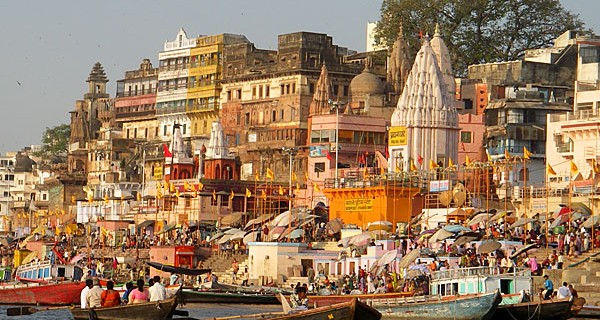
Varanasi (From Varuna Ghat to Assi Ghat, hence the name Varanasi), also known as Banaras, Banaras, is a North Indian city on the banks of the Ganges in Uttar Pradesh, India 320 kilometres south-east of the state capital.
Varanasi grew as an important industrial centre, famous for its muslin and silk fabrics, perfumes, ivory works, and sculpture. Buddha is believed to have founded Buddhism here around 528 BC when he gave his first sermon, "The Setting in Motion of the Wheel of Dharma", at nearby Sarnath. The city's religious importance continued to grow in the 8th century, when Adi Shankaraestablished the worship of Shiva as an official sect of Varanasi. Despite the Muslim rule, Varanasi remained the centre of activity for Hindu intellectuals and theologians during the Middle Ages, which further contributed to its reputation as a cultural centre of religion and education. Several major figures of the Bhakti movement were born in Varanasi, including Kabir and Ravidas. Guru Nanak Dev visited Varanasi for Shivratri in 1507, a trip that played a large role in the founding of Sikhism. In the 16th century, Varanasi experienced a cultural revival under the Muslim Mughal emperor Akbar who invested in the city, and built two large temples dedicated to Shiva and Vishnu, though much of modern Varanasi was built during the 18th century, by the Maratha andBhumihar kings. The kingdom of Benares was given official status by the Mughals in 1737, and continued as a dynasty-governed area until Indian independence in 1947




Transportation:
Varanasi is well-connected by air, rail and road. One of the major factors in Varanasi's is its access to all parts of the country. Within the city mobility is provided by taxis, rickshaws, cycle rickshaws and three wheelers but with certain restrictions in the old town area of the city.
The Lal Bahadur Shastri Airport
Varanasi is served by Lal Bahadur Shastri International Airport, which is approximately 26 km (16 mi) from the city centre in Babatpur. The airport inaugurated a new terminal in 2010, and it was granted international airport status on 4 October 2012. Air India, Buddha Air, Jet Airways, Jet Konnect, IndiGo, and SpiceJet operate flights from Varanasi to Delhi, Gaya, Kathmandu, Khajuraho, Sharjah, Lucknow, Mumbai, Hyderabad, Bangalore, and Kolkata. Over 330,000 passengers pass through the airport each year
Varanasi Junction, commonly known as Varanasi Cant Railway Station, is the city's largest train station. More than 360,000 passengers and 240 trains pass through each day. Some of the important express trains operating from the Varanasi Junction railway station are: the Udhna Varanasi Express that runs between Udhna (Surat) junction and Varanasi, a distance of 1,398 kilometres,the Kashi Vishwanath Express that runs between Varanasi and New Delhi Railway Station, the Kanpur Varanasi InterCityexpress, also called Varuna express, which runs over a distance of 355 kilometres and connects with Lucknow (the capital city of Uttar Pradesh) and Kanpur, and the Sabarmati Express which runs between Varanasi and Ahmedabad in Gujarat via Godhra. In 2011 the Sabarmati Express was involved in an attack by a Muslim mob when 59 people were killed in the Godhra train burning incident, most of them Hindu pilgrims returning from Ayodhya